

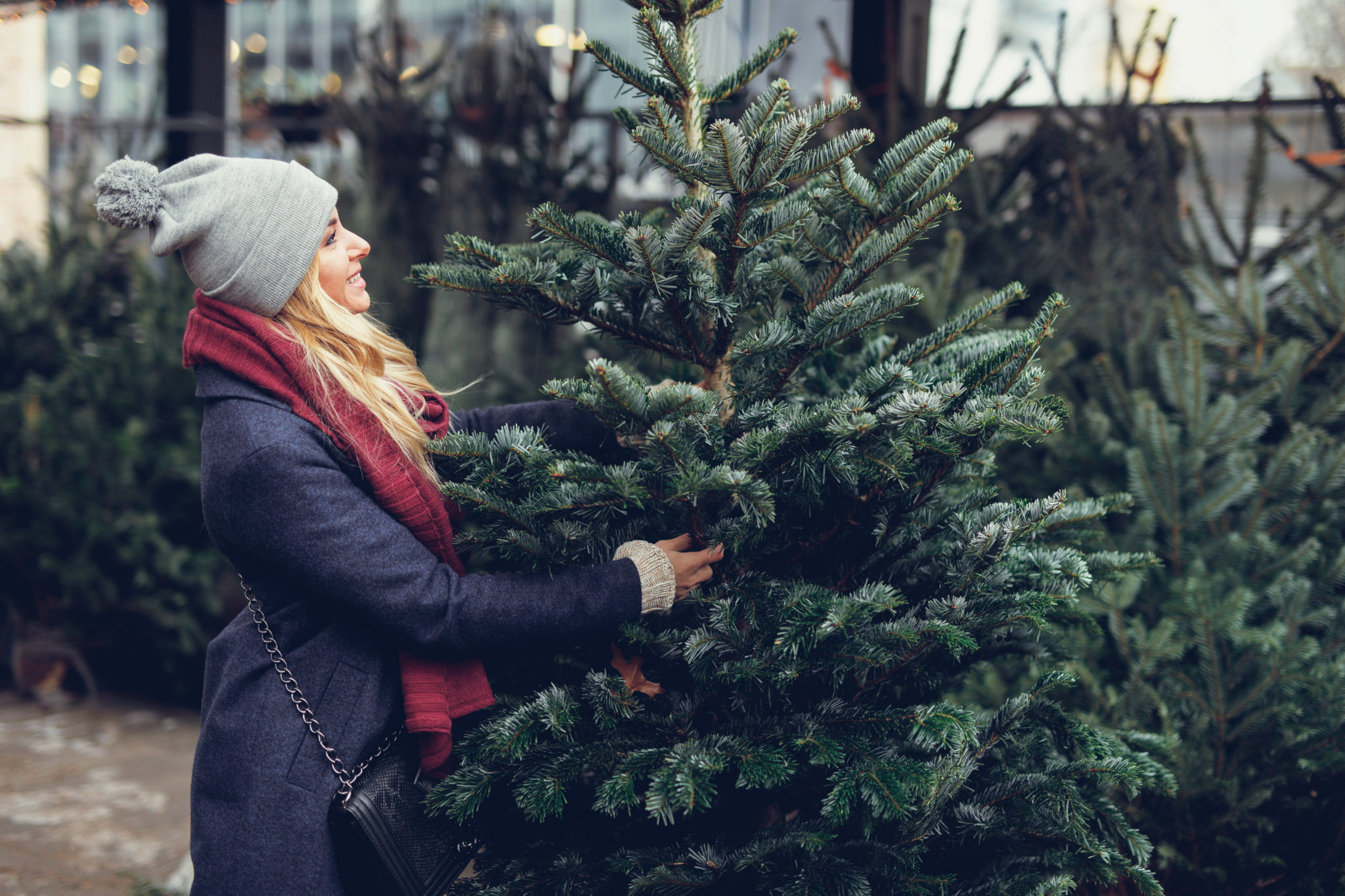
As you start thinking about the selection of your own Christmas tree, you won’t be alone in your search: according to the National Christmas Tree Association, around 30 million live Christmas trees are sold each year in the United States.
No matter where you buy your Christmas tree, here’s how to make sure it stays fresh, green and festive with smart shopping and care:
How to start shopping
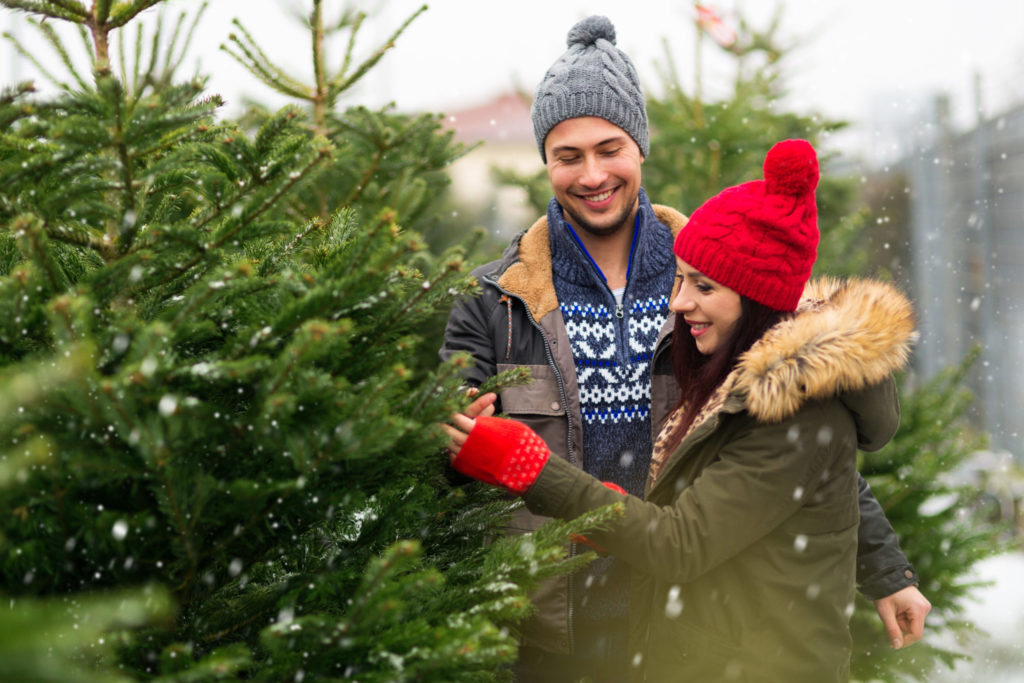
As with anything that comes into a home decorating scheme, everyone has their own opinions and preferences. The right tree for you is quite simply the one you like best (see favorite Christmas tree varieties, below); beyond that, all you need are some common-sense shopping guidelines to ensure that the one you select is a good fit in terms of size and freshness.
Before you head out the door on a Christmas tree shopping quest, settle on a location for your tree and measure both the vertical and horizontal dimensions of the space. While highly visible pride of place is a given, the tree is best located away from heat sources and shouldn’t block entrances or routine household traffic.
- Bring a measuring tape and know how much space you have for your tree. Trees look smaller in the field and on tree lots than they do in living rooms with ceilings.
- Pick the right pine. Different pines create different looks in your home. A Fraser Fir has a very traditional look with short needles and stiff branches for lots of ornaments. A long-needle pine offers an elegant, contemporary look with lights and garlands.
- Buy the right stand. It is important to buy or own a stand that is adequate to hold up the tree and hold enough water to keep the tree healthy through the season. New tree stand designs are easier to adjust and resist tipping over.
- Make a fresh cut. Re-cut the tree’s base before you put it in the stand so that it’ll start drinking water. And never, ever let the tree suck up all the water in the stand. Once a tree has gone without water, the trunk seals itself off and there’s no way to get it to start drinking water again short of taking the tree down and making another cut on the base.
Buying from a cut-your-own tree farm is the best assurance of an ultra-fresh product, but there are plenty of great candidates available at neighborhood lots, too. Here’s how to tell:
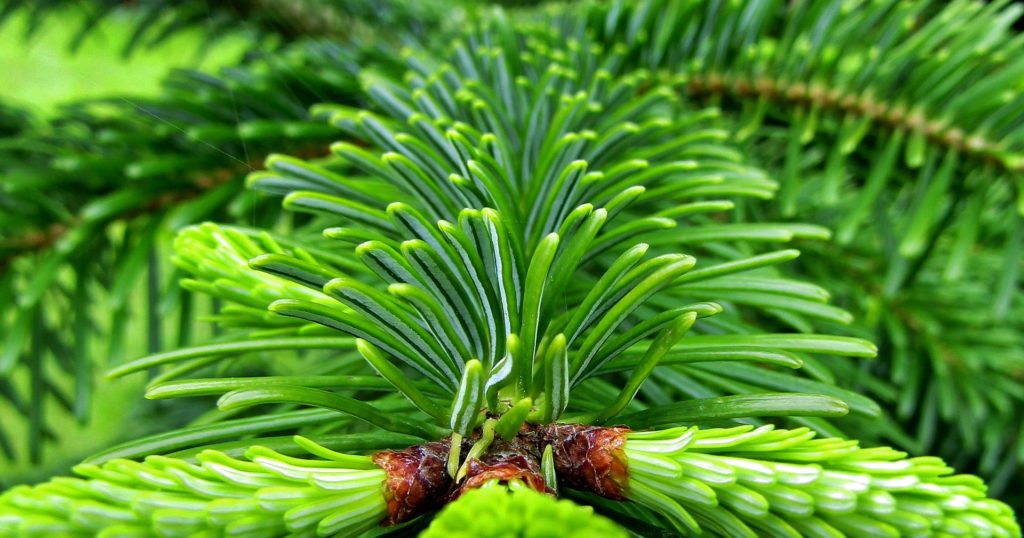
- Do a freshness test by sharply bending a few of a tree’s needles with your fingers: except in super-fibrous pine varieties, fresh, green needles will break crisply just like a fresh carrot.
- Some dry interior needles are natural, but take a pass on any tree that has excessive needle loss and foliage discoloration, wrinkled bark or a musty odor.
- If you’re still in doubt and can’t pin down the vendor as to the tree’s arrival date, move on to another lot.
How to Pick a Christmas Tree: Tips from This Old House




Read Transcript
LESLIE: Well, when it’s time to deck the halls, nothing is more confounding than finding the right Christmas tree. It’s got to be sturdy, it’s got to smell great and it’s got to last the entire season.
 TOM: And to do just that, there are a couple of tricks of the trade that can help. Here with those is Roger Cook, the landscaping contractor for TV’s This Old House.
Welcome, Roger.
ROGER: Thanks for having me.
TOM: And Happy Holidays. And this is that one time of the year where you probably look forward to cutting down those trees, right?
ROGER: I do, I do. It’s a good thing to cut these guys down. But before you go out to cut a tree, there’s one important thing you should know: the height of your ceiling.
TOM: I was going to say, “Measure your house,” right?
LESLIE: But it’s also the circumference. You really need to look at the area. Because I always buy a tree that’s way too fat for the area that I’m going to put it in and it kind of hangs into the dining room.
TOM: Yeah. And I usually buy one that’s too tall and leave a nice brown streak on the ceiling every Christmas.
LESLIE: I’ve got that, too.
ROGER: “Roger was here.” “Dad was here.”
TOM: Now, when it comes to choosing a holiday tree, there are many, many different types of trees that you can choose from. I went to a Christmas tree farm with my son last year and boy, the guys there just started rattling off – must have been six or seven or eight different types of trees that they had on that farm. So, how do you decide which one is best for you?
ROGER: Well, I try to buy ones that are local to the area, that have been shipped the least farthest.
TOM: OK.
ROGER: Because they were all farmed in different areas and brought in.
I also look for ones that have really stiff branches. I have a lot of heavy ornaments and if I put it on a limb and it droops all the way down, that’s not a very good-looking tree.
TOM: Right.
ROGER: So I’m looking for something that has a good, stiff branch on it.
TOM: So the types that you could choose from – you’ve got balsam fir, you’ve got Douglas fir, Fraser fir and noble fir.
ROGER: Mm-hmm. Yeah, those are …
TOM: So these four different types of fir.
ROGER: They’re all great Northern plants. The noble fir is not as common as the other three are. The Douglas fir has a soft needle on it. The balsam fir and the Fraser fir have a little stiffer needle on it but they are the most fragrant – the balsam fir and the Fraser fir – for me.
TOM: And that’s really – an important part of the holiday season is smelling that tree.
Now, you’ve also got the pines: Scots pines, Virginia pines, white pines. But they don’t seem to have as much aroma to them, right?
ROGER: No, I don’t think they do. They’re not a common plant up here for us to use. Every once in a while, you see them but I would say that 90 percent of them are going to be Fraser and balsam.
LESLIE: And I think the interesting thing …
TOM: And the pines tend to get a little sappy, too, don’t they?
LESLIE: And the pines tend to not shed their needles, right?
ROGER: Yeah, they hold very, very well but …
LESLIE: So it’s six of one, half-a-dozen of the other.
TOM: Right, exactly.
LESLIE: If you want it to smell great, you’re going to be sweeping up needles as the seasons progress.
ROGER: Well, I’ve got – there’s a couple things you can do when you buy the tree. I mean check it when you buy it. If you’re pulling the needles and they’re all falling out in your hand, then you want to go to another one.
TOM: OK.
ROGER: Before it comes home with you, after you’ve picked out the perfect tree, have them shake it. They make shakers that’ll just rattle it and get all the dead needles off it right away so you don’t get them in your house.
And then once you get home, it’s water, water, water and more water. You don’t want that tree to go out. I skipped one crucial step and that’s you need to recut the butt.
TOM: Right.
ROGER: If it’s been more than an hour since they cut it for you at the farm, cut it again.
TOM: Mm-hmm. Because that really helps the tree absorb more water.
ROGER: Yeah. And a real trick, if you like the smell of a Christmas tree: take a little branch off the back and shred it. Cut it up into little pieces and put it in a bowl right before company comes over.
TOM: OK.
ROGER: The whole house will smell like a Christmas tree and no one will know your secret.
TOM: Wow.
LESLIE: Well, that’s really nice.
Now, it gets to a point, though – I water the tree every single day, religiously. You know, first thing in the morning, I come down, feed the dog, feed the kids, water the tree. At some point, it stops drinking. How do you prolong that?
ROGER: Yeah, that tells you that it’s done. Unless you took the tree down and recut the base again, it’s not going to absorb any more water. But hopefully, that’ll be two or three weeks so that you have gotten through Christmastime. And that’s one other tip is before you take the tree out, make sure you get the water out of that basin. Don’t ask me how I know how but it spills all over the place.
TOM: Yeah, I like to do that. And also, the one thing that I will buy is the Christmas tree bag. Very helpful to be able to pull that up around the tree. It doesn’t get all the needles but it saves you a little bit of work.
ROGER: Yeah. But see, I disagree with that because that bag is not going to be recycled or chipped.
TOM: Ah, good point.
ROGER: It’s going in the landfill.
TOM: Yep, great point. Roger Cook, good advice about how to pick the perfect Christmas tree. And I guess the answer is: whichever one makes you feel most like Christmas is the right tree for you.
ROGER: That’s the one.
LESLIE: Alright. Catch the current season of This Old House and Ask This Old House on PBS. For local listings and step-by-step videos of many common home improvement projects, visit ThisOldHouse.com.
TOM: And This Old House is brought to you on PBS by State Farm. Like a good neighbor, State Farm is there.
Care and feeding of your Christmas tree
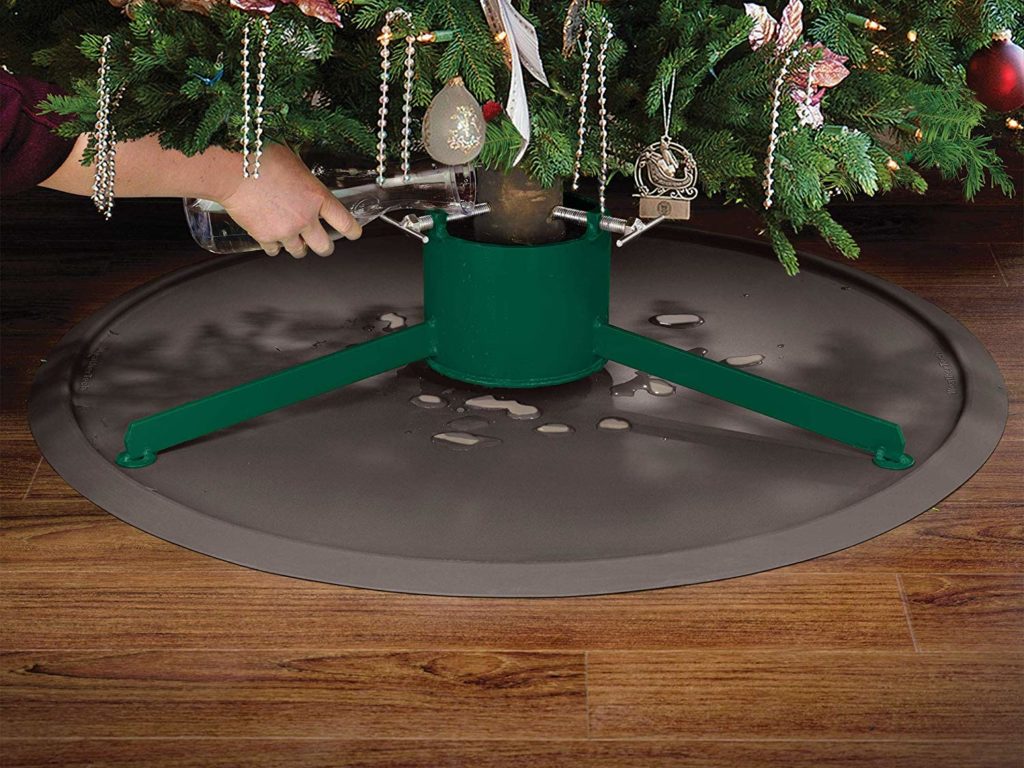
After buying your Christmas tree, it’s time to decide whether you’ll be putting it up immediately or taking a few days’ break before doing the trimming, give your Christmas tree a trunk trim and a generous drink of water. For outdoor storage, choose a shady, sheltered spot, and before placing the tree in a bucket of water, make a straight cut half an inch from the bottom of its trunk to aid moisture absorption. The tree’s first 24 hours at your home are typically its thirstiest, so keep an eye on the water level.
When you’re ready to bring your Christmas tree indoors for its starring holiday role, double check you’ve got a stand suited to its dimensions, with a reservoir allowing one quart of water capacity for every inch of the trunk’s diameter. Cut another half inch off the bottom of the tree’s trunk before placing it in the stand (make sure it’s a straight cut, as tapers or angles don’t help absorption or stability).
Next, and that reservoir with plain tap water. That’s right–plain water! Research has shown that it’s the best for your tree, and that such additives as bleach, aspirin and fertilizer can actually be detrimental to moisture retention. Keep the reservoir full and the water line above the trunk’s base via daily checks, and you’ll enjoy a lush, fresh tree throughout the holidays.
The season’s end will eventually arrive, giving both you and your tree an opportunity to do something good for the environment. Christmas trees can easily be recycled into nutrient-rich mulch, and most cities now have post-holiday collection programs for that purpose. To find one in your area, enter your zip code at www.christmastree.org.
Favorite Christmas tree varieties
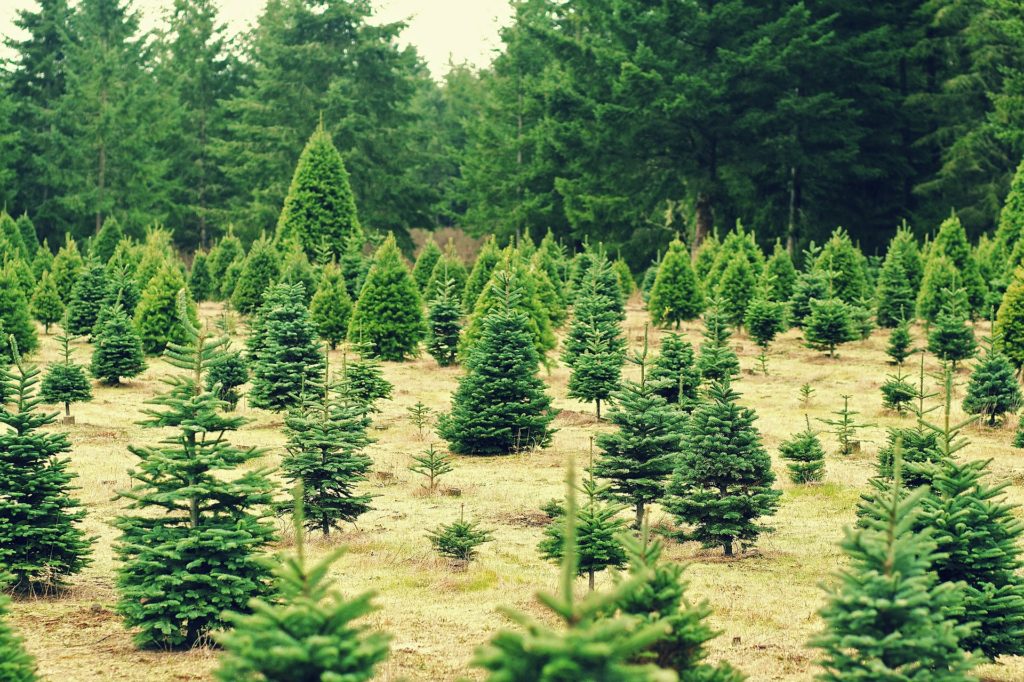
Regional availability, decoration style and family tradition all influence Christmas tree shopping and selection. Here’s the scoop on top tree varieties that’ll be starring in living rooms around the country this season.
- Balsam fir: The Balsam fir is a long-lasting variety with fairly short, dark-green needles, great form and a pleasant scent.
- Douglas fir: One of the most popular varieties nationally and frequently the tree of choice in the Pacific Northwest, the Douglas fir has short, soft blue-green needles giving off a sweet fragrance when crushed.
- Fraser fir: Dark blue-green color, upward-turning branches and a pleasant scent are the hallmarks of the Fraser fir.
- Noble fir: The stiff, well-spaced branches of the Noble fir contribute to its growing popularity for display and wide use in other decorations such as wreaths and swags.
- Scotch pine: The most common of American Christmas trees, the Scotch pine is lush and long-lasting, and its needles won’t fall when they’re dry.
- Virginia pine: The stout, woody branches of the Virginia pine are made for trimming, and it’s the belle of many a Christmas ball in the South.
- White pine: This variety sports flexible, soft bluish-green needles that are two and a half to five inches long. White pines have little aroma but good needle retention and reportedly spur fewer allergic reactions than other tree types.
- White spruce: With the best needle retention in the spruce family, the White spruce makes up for the unpleasant aroma those needles give off when crushed. Short, stiff needle form and a great natural shape contribute to easy decorating.
- Colorado blue spruce: The symmetrical form and attractive blue foliage of this variety make it a pleasant holiday addition as well as a frequent feature in perennial landscaping. Just watch out for those sharp needles, which have a bad odor when crushed.
- Leyland cypress: The star of many Southeastern Christmas displays, the Leyland cypress has a lovely dark green-gray color and doesn’t produce allergy-inducing sap like pine or fir trees.
To go green, go live
If you’re thinking that buying a live Christmas tree isn’t the most eco-friendly holiday choice, think again. Unlike their mostly plastic, artificial Christmas tree counterparts, live Christmas trees contribute positively to the environment where they’re raised, are a renewable resource (one to three seedlings are planted in place of every tree harvested), and are recyclable and biodegradable after their decorative purpose has been fulfilled.


Leave a Reply